2026 Best High Tensile Carriage Bolts for Global Buyers

Choosing the right High Tensile Carriage Bolt can affect assembly speed, joint stability, and long-term maintenance costs. In 2026, global buyers face a crowded market filled with different steel grades, coatings, head profiles, thread formats, and supplier claims. This guide examines the best options through practical purchasing criteria, not attractive catalog language alone. It considers tensile performance, proof strength, dimensional consistency, corrosion resistance, packaging quality, and traceable test documentation.

Real-world experience matters. A bolt may look excellent in a sample box but perform poorly when its square neck slips inside soft timber or thin metal. Fit matters. Buyers should check neck dimensions, thread engagement, washer compatibility, and tightening conditions before placing large orders. Clear drawings and inspection records can prevent expensive rework at the installation site.

The evaluation also considers production expertise, quality-control practices, and supplier reliability across international shipments. Recognized material standards can provide useful reference points, but certificates should match the actual batch, not a generic product family. That detail is easy to miss. Shipment photos, salt-spray results, hardness reports, and independent inspections may reveal more than a polished product page.

No single carriage bolt suits every application. A zinc-plated carbon steel model may serve indoor framing, while a stainless option could better suit humid environments. Even this distinction requires caution, because coating quality, load direction, and local exposure can change the result. The following overview helps engineers, distributors, and procurement teams compare leading High Tensile Carriage Bolt products with clearer judgment and fewer costly assumptions.
2026 Best High Tensile Carriage Bolts for Global Buyers

What High Tensile Carriage Bolts Are and Why They Matter in 2026

2026 Best High Tensile Carriage Bolts for Global Buyers

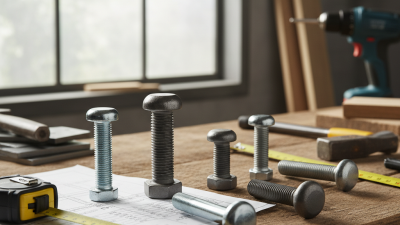
High tensile carriage bolts combine a rounded head, square neck, and threaded shank. The square neck grips the material and limits rotation during tightening. Their higher strength supports demanding joints in trailers, steel frames, agricultural equipment, and outdoor structures. In 2026, buyers need more than an attractive price. They need verified performance, consistent dimensions, and clear technical records.

Strength depends on the steel grade, heat treatment, thread quality, and manufacturing control. A bolt marked to a recognized standard, such as ISO 898-1, offers a useful starting point. However, markings alone are not enough. Check test certificates, coating details, batch traceability, and dimensional tolerances. Match the bolt with a suitable nut and washer. Incorrect pairing can reduce clamping force or damage the threads. Corrosion protection also matters. Zinc coatings help, but they do not replace proper material selection in marine or chemical environments.

Tips: Confirm the required diameter, grip length, strength class, and finish before ordering. Ask for sample inspection when purchasing across borders. Measure the square neck and thread length, not only the package label. From practical checks, one common mistake is choosing strength without checking fit. I have seen a strong bolt fail because the grip was too short. Torque guidance should come from the supplier or applicable standard. Real installations vary. Temperature, joint materials, and lubrication can change results. Recheck critical joints after assembly.

Key Materials, Strength Grades, and Performance Standards

2026 Best High Tensile Carriage Bolts for Global Buyers

Material selection controls more than bolt strength. Medium-carbon steel offers reliable performance for general structural and machinery applications. Alloy steel suits heavier loads and repeated vibration. Stainless steel resists corrosion well, but its strength may be lower than hardened alloy grades. Environment matters.

High tensile carriage bolts commonly use property classes 8.8 and 10.9 under ISO 898-1. Class 8.8 provides a practical balance between tensile strength, ductility, and cost. Class 10.9 supports higher loads, but it needs careful tightening and suitable joint design. Inch-based buyers may specify ASTM A449 or ASTM A354 requirements. Mixing systems creates avoidable errors.

Do not judge quality by grade markings alone. Check mill certificates, hardness results, tensile tests, and dimensional inspection records. The square neck should seat fully in the material, especially in timber or thin steel sections. Zinc coatings improve corrosion resistance, yet improper processing can increase hydrogen embrittlement risk. Stainless options need separate consideration for galling during installation.

A stronger bolt is not automatically safer. I have seen oversized grades damage softer connected parts. Torque charts also vary with coating, lubrication, and thread condition. That detail is often missed. Global buyers should confirm thread form, diameter, length, head dimensions, coating thickness, and applicable standards before ordering. Batch traceability and third-party inspection add confidence when failure would be costly.

2026 Best High Tensile Carriage Bolts for Global Buyers

Key materials, strength grades, and performance standards based on ISO 898-1 property classes. The chart compares minimum nominal tensile strength and yield strength for commonly specified carbon-steel and alloy-steel carriage bolts.

ISO property classes use the first two digits to indicate the nominal tensile strength in hundreds of megapascals. For example, class 10.9 has a minimum nominal tensile strength of 1,000 MPa and a minimum yield strength of approximately 900 MPa. Classes 8.8, 10.9, and 12.9 are generally selected for high-tensile applications, subject to design loads, corrosion conditions, thread size, and installation requirements.

Reference framework: ISO 898-1 mechanical-property classes for carbon-steel and alloy-steel fasteners. Values shown are minimum nominal strength values in MPa and are not manufacturer-specific performance claims.

How to Choose the Right Carriage Bolt for Global Applications

Choosing the right carriage bolt starts with load, not appearance. For high-tensile carbon or alloy steel fasteners, ISO 898-1:2013 lists 800 MPa minimum tensile strength for property class 8.8 and 1,040 MPa for class 10.9. These figures help engineers compare strength across markets. They do not replace joint calculations. A stronger bolt can still fail when the timber, sheet metal, or clamped thread is weaker.

Check the standard before ordering. ASME B18.5 defines carriage-bolt dimensions, including head diameter and square-neck geometry, while ISO metric threads may not interchange with inch threads. Measure the grip length under the head. Too long leaves exposed threads; too short prevents full engagement. I have seen avoidable failures caused by selecting tensile grade before checking the joint thickness. The choice is not always obvious.

Coating and environment matter. ISO 9227:2022 uses neutral salt-spray testing, but laboratory hours do not predict outdoor service life perfectly. For coastal or humid applications, request coating specifications, lot traceability, and test results under ASTM F606/F606M or equivalent procedures. Consider hydrogen embrittlement controls for high-strength plated bolts. Use compatible nuts and washers, and verify tightening guidance for the selected finish. A certificate helps. It is not proof of correct installation. Temperature, vibration, hole clearance, and torque variation still deserve field review.

2026 Best High Tensile Carriage Bolts for Global Buyers - How to Choose the Right Carriage Bolt for Global Applications
Strength Grade or Material Applicable Standard Minimum or Typical Tensile Strength Common Size Range Thread System Typical Corrosion Protection Suitable Global Applications Key Selection Consideration
Low-Carbon Steel, Grade A ASTM A307 Grade A 60 ksi minimum
(approximately 415 MPa)
Commonly available from 1/4 in to 3/4 in; actual availability depends on the dimensional specification Unified coarse thread, such as UNC; inch sizes Plain steel, electroplated zinc, or hot-dip galvanized finish General construction, light timber assemblies, brackets, and non-critical fastening Choose when moderate strength and low cost are more important than high preload or fatigue resistance.
SAE Grade 5 Carbon Steel SAE J429 Grade 5 120 ksi minimum
(approximately 827 MPa)
Commonly available from 1/4 in to 1 in Unified coarse or fine thread; inch sizes Zinc electroplating, zinc flake coating, black oxide, or plain oil finish Vehicle frames, agricultural equipment, machinery, structural wood connections, and medium-duty assemblies A practical high-tensile inch option when higher clamp load is needed; verify the nut grade and washer compatibility.
SAE Grade 8 Alloy Steel SAE J429 Grade 8 150 ksi minimum
(approximately 1,034 MPa)
Commonly available from 1/4 in to 1-1/2 in Unified coarse or fine thread; inch sizes Zinc flake coating, black oxide, or other controlled protective coating Heavy machinery, high-load brackets, transport equipment, and demanding structural assemblies Use only where the connected parts and mating nuts are designed for the higher preload; avoid substituting for lower-grade fasteners without engineering review.
Property Class 8.8 Carbon or Alloy Steel ISO 898-1; carriage-bolt dimensions commonly referenced to ISO 8677 or DIN 603 800 MPa minimum tensile strength for standard size ranges Commonly available from M5 to M16; larger sizes may be available by order Metric coarse thread; fine thread is less common for carriage bolts Electroplated zinc, zinc flake, hot-dip galvanized, or plain finish Industrial machinery, steel and timber structures, agricultural equipment, and general export applications The most widely used metric high-tensile class; confirm the complete dimensional standard because head and neck dimensions vary.
Property Class 10.9 Alloy Steel ISO 898-1; dimensions commonly referenced to ISO 8677 or DIN 603 1,040 MPa minimum tensile strength for standard size ranges Commonly available from M6 to M16 Metric coarse thread; fine thread available for selected sizes Zinc flake coating or controlled corrosion-resistant coating; avoid unsuitable hydrogen-generating processes High-load machinery, vehicle components, heavy equipment, and compact assemblies requiring high clamp force Requires compatible nuts and controlled tightening; coating selection is important because high-strength steel can be vulnerable to hydrogen embrittlement.
Austenitic Stainless Steel, 304 Type ASTM F593; dimensional requirements must be specified separately Strength depends on alloy group and condition; commonly about 515–860 MPa tensile strength Commonly available from M5 to M16 Metric or Unified thread, depending on the order specification Passivated or clean, plain stainless finish Outdoor equipment, food-processing surroundings, architectural timber, and humid environments Provides good general corrosion resistance but normally has lower strength than property class 8.8 or 10.9 steel.
Austenitic Stainless Steel, 316 Type ASTM F593; dimensional requirements must be specified separately Strength depends on alloy group and condition; commonly about 515–860 MPa tensile strength Commonly available from M5 to M16 Metric or Unified thread, depending on the order specification Passivated or clean, plain stainless finish Marine atmospheres, coastal construction, chemical exposure, and high-humidity applications Offers improved resistance to chloride-related corrosion compared with 304-type stainless steel, but galling and lower hardness must be considered.
Hot-Dip Galvanized Carbon Steel ASTM F2329 or ISO 10684 for coating requirements; bolt strength class must be specified separately Depends on the specified base-steel grade; do not infer tensile strength from the coating standard Commonly available from 1/4 in or M6 through approximately 1 in or M24 Unified or metric thread; oversized nuts may be required for the thicker coating Hot-dip zinc coating with a comparatively thick protective layer Outdoor timber structures, utility installations, bridges, fencing, and exposed construction Specify both the mechanical grade and the galvanizing standard; check thread allowance, nut fit, and coating thickness.
Zinc-Flake-Coated High-Strength Steel Base bolt may comply with SAE J429 or ISO 898-1; coating performance must be separately specified Typically available in Grade 5, Grade 8, class 8.8, or class 10.9 strength levels Commonly available from 1/4 in to 1 in or M6 to M16 Unified or metric thread Non-electrolytic zinc-flake coating; coating thickness and corrosion test requirement must be stated in the purchase specification Automotive, outdoor machinery, renewable-energy equipment, and assemblies requiring high strength with enhanced corrosion protection A strong choice for high-strength applications where hydrogen-embrittlement risk from electroplating must be minimized.
Global purchasing note: A carriage-bolt standard may define dimensions, strength, thread, or coating separately. Before ordering, specify the diameter, length measured from beneath the head, thread standard and pitch, material or property class, head and square-neck dimensions, coating, nut compatibility, corrosion requirement, and applicable inspection documents. Tensile values shown are standard minimums or typical ranges and should be verified against the current edition of the specified standard.

Top Features of the Best High Tensile Carriage Bolts

For global buyers, the best high tensile carriage bolts begin with verified steel quality, not a glossy finish. A tested grade, clear property class, and batch certificate help engineers match bolt strength with joint loads. Look for consistent head dimensions and a square neck that locks firmly into timber or metal. It should resist turning during nut tightening. Small details matter.

Corrosion protection is another key feature. Zinc plating suits many indoor and light outdoor assemblies, while thicker coatings may serve harsher exposure. However, coating choice can affect thread fit and tightening behavior. Check coating thickness, thread accuracy, and washer compatibility before purchase. A smooth, complete thread should engage without grinding or sudden resistance. That indicates manufacturing control, but it cannot replace laboratory testing.

Reliable suppliers provide dimensional inspection records, tensile test results, and traceable lot numbers. Buyers should confirm diameter, length, thread pitch, neck size, and applicable standards before ordering containers. During trial installation, measure torque and inspect joints after vibration or repeated loading. Do not rely on appearance alone. Bright bolts can still fail a basic fit check. Packaging should prevent mixed sizes, damaged threads, and moisture exposure during international transport.

Global Sourcing, Quality Inspection, and Buyer Checklist

2026 Best High Tensile Carriage Bolts for Global Buyers

Global sourcing starts with a clear technical sheet. Specify diameter, length, thread pitch, steel grade, head shape, and surface finish. For high tensile applications, buyers often request grades such as 8.8 or 10.9, supported by recognized mechanical testing. Do not accept “high strength” as a complete description. Ask for the applicable standard, heat treatment record, and material certificate. Small details matter. A 2 mm length error can affect assembly clearance.

Quality inspection should combine documents with physical checks. Inspect head diameter, square neck dimensions, thread accuracy, coating coverage, and surface cracks. Use calibrated gauges and sampling plans agreed before production. Tensile testing, hardness testing, and torque checks can reveal problems that visual inspection misses. Check several cartons, not only the top layer. Packaging should prevent mixed sizes, damaged threads, and moisture exposure during ocean transport.

A reliable supplier should provide lot numbers and traceability from steel mill to shipment. Review inspection reports carefully, but verify selected results independently when the application is critical. One overlooked sampling assumption can weaken an otherwise strong process. That is worth revisiting. Buyers should also confirm tolerances, delivery terms, labeling language, and required import documents before payment. Keep retained samples for comparison during repeat orders. Specifications are useful, but actual production behavior still deserves attention.