2026 Top Mushroom Head Screw Types for Global Buyers?

Choosing the right fastener can affect assembly speed, surface safety, appearance, and long-term reliability. The 2026 global market offers many Mushroom Head Screw types, but product names alone rarely tell the whole story. Buyers must examine head diameter, head height, drive style, thread form, material, and surface treatment. A low-profile screw may suit visible panels, while a stronger stainless steel option may better serve outdoor equipment.

This guide reviews practical choices for international purchasing teams, engineers, distributors, and manufacturers. It compares stainless steel, carbon steel, alloy steel, and coated finishes under different service conditions. It also considers Phillips, hex, Torx, and security drive designs. Small details matter. A deep drive can reduce tool slippage. A wide head can spread pressure across thin sheet metal. An unsuitable coating may fail near saltwater or cleaning chemicals.

Reliable sourcing requires more than a competitive quotation. Buyers should request dimensional drawings, material certificates, inspection records, and batch traceability. Relevant DIN, ISO, or ASME references should be confirmed against the final application. Metric and imperial threads must never be assumed interchangeable. That mistake is surprisingly common. Torque recommendations also depend on thread condition, lubrication, and joint design.

No single Mushroom Head Screw fits every project. Cost still matters, but replacement delays can cost more. This overview highlights proven selection methods, current supply considerations, and limitations that catalogs often overlook. Some recommendations may need adjustment after real testing. That is the honest part. A sample installation, corrosion check, and torque verification can reveal problems before full-scale purchasing begins.
2026 Top Mushroom Head Screw Types for Global Buyers?

Mushroom Head Screws: Definition, Design, and Core Features

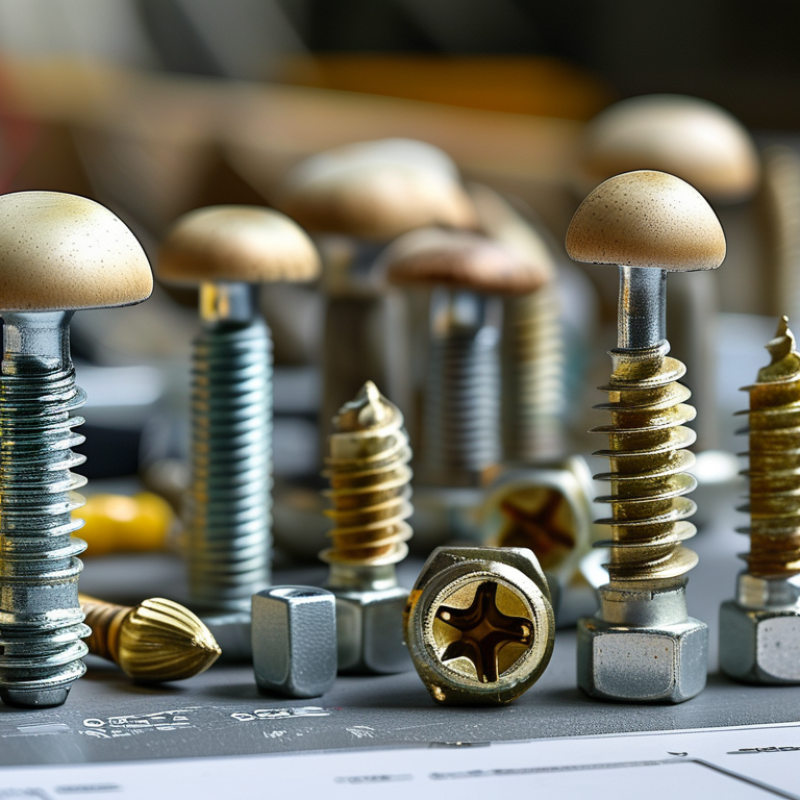
Mushroom head screws have a rounded, low-profile head that resembles a small dome. Their smooth upper surface reduces snagging on clothing, tools, and nearby components. The head usually sits above the material instead of sinking fully into it. This makes the fastener visible after installation. Some buyers call them pan, button, or truss head screws, but these terms are not always interchangeable.

The head shape is the main design feature. A broad bearing surface spreads clamping pressure across thin sheet metal, plastic panels, and light timber. A recessed drive, such as Phillips, hex, or Torx-style, helps transfer installation force. Drive choice matters more than many purchasing teams expect. Poor engagement can damage the recess before the joint reaches its required tightness.

Material and finish determine practical performance. Stainless steel resists moisture, while coated carbon steel often provides higher strength at a lower cost. Thread length should allow firm engagement without striking hidden wires or internal parts. Check diameter, pitch, head diameter, drive size, and tolerances before ordering large quantities. A sample fit is wise. Drawings can miss real assembly problems. The “best” mushroom head screw depends on load, exposure, tooling, and appearance. Even experienced buyers sometimes overlook washer compatibility. That small mistake can leave marks around the head.

Main Mushroom Head Screw Types and Their Structural Differences

2026 Top Mushroom Head Screw Types for Global Buyers

Mushroom head screws use a rounded, low-profile crown instead of a flat or hexagonal head. The broad head spreads clamping pressure across a larger surface. This reduces pull-through on thin panels, plastic sheets, and timber. Standard mushroom heads usually have a smooth underside and a conventional drive recess. Their head height remains modest, so exposed edges feel less sharp.

Structural differences

Structural differences become clearer when comparing head shapes. A high-dome type offers more clearance and a stronger visual cover, but it needs extra space above the joint. A low-dome type sits closer to the surface and suits compact assemblies. Some designs include a square neck beneath the head. That neck resists rotation in soft materials, similar to a carriage-style fixing. Shoulder versions add a wider unthreaded section for spacing or controlled movement.

Drive design and buyer checks

Drive design also changes performance. Internal hex, six-lobe, and tamper-resistant recesses can improve torque control or discourage casual removal. However, the recess must match the installation tool precisely. Poor engagement damages the drive quickly. Buyers should check head diameter, crown height, neck size, thread length, material grade, coating, and dimensional tolerance.

A common mistake is choosing by diameter alone. I have found that a larger head does not always provide better holding power. Material thickness and hole clearance can matter more. Test samples under realistic loads before approving a large shipment.

Choosing Materials, Coatings, Sizes, and Drive Styles

2026 Top Mushroom Head Screw Types for Global Buyers?

Choosing Materials, Coatings, Sizes, and Drive Styles

Mushroom head screws provide a broad, low-profile surface for panels, fittings, and light assemblies. Their appearance is clean, but material selection controls service life. Carbon steel offers strength and competitive pricing for dry indoor projects. Stainless steel performs better in damp rooms, coastal air, and food-processing environments. Aluminum reduces weight, though it may not suit high-torque joints. Confirm the base material before comparing prices.

Coatings deserve careful attention. Zinc plating supports general indoor use, while thicker protective finishes can improve resistance against humidity and handling damage. Ask suppliers for coating thickness, salt-spray results, and batch inspection records. Surface color alone proves very little. It can look durable and still fail near a salty loading dock. Not always. Consider galvanic corrosion when dissimilar metals touch, especially around aluminum parts.

Size and drive style should match the installation method. Common choices include metric diameters from M3 to M8 and equivalent imperial sizes. Select a length that engages fully without piercing the opposite surface. Phillips drives suit common hand tools, while hex or Torx-style recesses usually transfer higher installation torque. A shallow recess may strip during repeated assembly. Measure twice. I have seen buyers choose attractive heads, then discover that the driver cannot reach a recessed hole. Request samples, verify head diameter, test torque, and review dimensional reports before approving a large production order.

2026 Top Mushroom Head Screw Types for Global Buyers? - Choosing Materials, Coatings, Sizes, and Drive Styles

Screw Type / Head Profile Typical Materials Common Coatings or Finishes Common Diameter Range Typical Length Range Drive Styles Typical Applications Key Buying Considerations
Button Head Cap Screw Carbon steel, alloy steel, stainless steel Plain, black oxide, zinc plated, passivated M3–M16; approximately #4–5/8 in 6–120 mm; approximately 1/4–5 in Internal hexagon, six-lobe Machine assemblies, guards, furniture hardware, equipment frames Select a property class or strength grade suitable for the joint; confirm wrenching depth and head clearance.
Button Head Socket Screw Alloy steel, stainless steel, low-carbon steel Black oxide, zinc, bright stainless, corrosion-resistant passivation M2.5–M12; approximately #2–1/2 in 4–100 mm; approximately 3/16–4 in Hex socket, six-lobe Compact machinery, electronics enclosures, brackets, consumer products Useful where a low-profile rounded head is needed; verify drive recess size to reduce stripping risk.
Pan Head Machine Screw Carbon steel, stainless steel, brass Zinc plated, nickel plated, plain, passivated M2–M10; approximately #2–3/8 in 4–80 mm; approximately 3/16–3 in Phillips, slotted, hex socket, six-lobe Electrical panels, sheet-metal assemblies, light-duty equipment Choose a pan head for general-purpose fastening where the head may remain exposed.
Truss Head Screw Low-carbon steel, stainless steel, hardened steel Zinc plated, hot-dip galvanized for selected applications, plain stainless M3–M10; approximately #4–3/8 in 6–75 mm; approximately 1/4–3 in Phillips, six-lobe, slotted Thin sheet metal, mesh, plastic components, cable management hardware The wide, low-profile head provides increased bearing area; check underside clearance and material thickness.
Mushroom Head Square-Neck Bolt Carbon steel, stainless steel, galvanized steel Zinc plated, hot-dip galvanized, plain stainless M5–M16; approximately 1/4–5/8 in 16–150 mm; approximately 5/8–6 in Nut-driven; square neck provides anti-rotation Wood-to-metal connections, fencing, outdoor structures, vehicle and trailer hardware Measure the square-neck dimensions and grip length; use corrosion protection appropriate for outdoor exposure.
Mushroom Head Ribbed-Neck Bolt Carbon steel, stainless steel Zinc plated, hot-dip galvanized, passivated M6–M16; approximately 1/4–5/8 in 20–160 mm; approximately 3/4–6-1/4 in Nut-driven; ribbed neck resists rotation in suitable materials Timber assemblies, seating, agricultural equipment, general structural fastening Check rib geometry, hole preparation, clamping thickness, and installation torque.
Self-Tapping Mushroom Head Screw Case-hardened carbon steel, stainless steel Zinc plated, organic anti-corrosion coating, passivated M2.5–M8; approximately #4–5/16 in 6–50 mm; approximately 1/4–2 in Phillips, six-lobe, hex washer drive Thin metal, plastic, HVAC components, appliance panels Match thread-forming geometry to the substrate; confirm pilot-hole size and resistance to over-tightening.
Security Button Head Screw Stainless steel, alloy steel, carbon steel Passivated, black oxide, zinc plated M3–M10; approximately #4–3/8 in 6–80 mm; approximately 1/4–3 in Pin hex, pin six-lobe, one-way drive Public fixtures, access panels, transport equipment, tamper-resistant enclosures Specify the matching security tool and confirm whether tamper resistance or removal prevention is required.
Buyer checklist: Confirm thread system, nominal diameter, pitch or threads per inch, length measurement method, material grade, coating thickness, corrosion environment, drive standard, head dimensions, packaging quantity, and applicable dimensional or mechanical standards before placing a global order.

Global Standards, Applications, and Buyer Selection Criteria

2026 Top Mushroom Head Screw Types for Global Buyers

Global Standards, Applications, and Buyer Selection Criteria

Mushroom head screws are not one universal product category. In supplier catalogs, the term may describe button, truss, or low-profile heads. Buyers should confirm the drawing, not rely on the name alone. ISO 7380 covers button head socket screws, while ASME B18.6.3 addresses several machine screw forms. Thread dimensions, drive style, and head diameter must match the receiving component.

Market demand supports careful specification. Grand View Research estimates the global fasteners market at more than USD 100 billion in 2023, with continued growth through 2030. Mordor Intelligence also identifies construction, automotive, and machinery as major demand areas. These figures suggest broad purchasing activity, but they do not prove that one screw type fits every industry. That assumption often creates costly rework.

For outdoor panels, stainless steel mushroom heads can improve corrosion resistance and give a smoother appearance. Zinc-plated carbon steel suits many indoor assemblies, while alloy steel helps where higher strength is required. Buyers should compare tensile strength, hardness, salt-spray results, coating thickness, and batch traceability. A tamper-resistant drive may reduce unauthorized removal, but it can slow maintenance. It is a trade-off.

Ask for dimensional inspection records and material certificates. Check thread gauges, head height, drive depth, and plating consistency. A sample run under real torque is more useful than a polished catalog image. Even experienced teams sometimes overlook washer compatibility. That small detail can affect clamping reliability.

2026 Top Mushroom Head Screw Types for Global Buyers

Button-head, pan-head, and truss-head screws are commonly selected when a low-profile, rounded head is preferred. For stainless-steel versions, ISO 3506 property classes provide a globally recognized basis for comparing minimum tensile strength.

Buyer selection guidance: A2 grades are widely used for general indoor and outdoor corrosion resistance, while A4 grades are preferred for more demanding marine or chloride-rich environments. Confirm the head style, drive system, thread standard, coating, corrosion environment, and required strength class before purchasing. The tensile-strength values shown are ISO 3506 minimums and are not a substitute for the allowable working load of a specific screw size.

2026 Purchasing Trends, Quality Checks, and Supplier Evaluation

2026 Top Mushroom Head Screw Types for Global Buyers?

In 2026, buyers are comparing mushroom head screws by application, not appearance alone. Phillips and Torx drives remain common for general assembly. Slotted drives suit simple maintenance work, but they can slip under high torque. Stainless steel fits humid environments, while zinc-plated carbon steel often offers a lower purchase cost. Thread size, head diameter, drive depth, and surface finish must match the installation tool and base material.

Purchasing trends now favor stable supply, traceable batches, and smaller trial orders. A practical quality check starts with random sampling from several cartons. Inspect thread gauges, head height, coating coverage, and drive alignment. Measure dimensions with calibrated tools. Run torque tests and, where corrosion matters, request documented salt-spray results. Certificates help. They are not proof by themselves. Packaging also deserves attention; mixed lots and crushed cartons can create hidden costs.

Supplier evaluation should combine factory evidence with communication quality. Review production capacity, inspection records, material traceability, corrective-action reports, and realistic lead times. Ask for samples from normal production, not specially selected pieces. Compare defect rates and replacement procedures before comparing unit prices. A low quote may exclude tooling, testing, or freight. No checklist is perfect. Even experienced buyers can overlook inconsistent hardness between batches. Rechecking after the first shipment is wise, especially when screws enter automated assembly or outdoor equipment. A supplier that admits a weakness and fixes it may be more reliable than one offering flawless paperwork.