How to Choose the Right Furniture Bolt for Your Project?
Choosing the right furniture bolt is crucial for the integrity of any project. According to the Furniture Manufacturers Association, nearly 70% of furniture failures are due to inadequate hardware. This emphasizes the importance of selecting the appropriate hardware components, especially when it comes to furniture bolts.
Furniture bolts come in various sizes and materials, each serving different functions. For example, a common choice is the hex bolt, favored for its strength and ease of use. Many professionals stress the importance of understanding load requirements and material compatibility. Yet, not all projects clearly specify these needs, leading to unnecessary challenges.
Inexperienced builders may overlook critical aspects, often resulting in unsafe or unstable constructions. A well-chosen furniture bolt provides reliability and longevity, but it requires careful consideration. The right selection can make the difference between a sturdy piece and a potential hazard.
Understanding the Different Types of Furniture Bolts Available
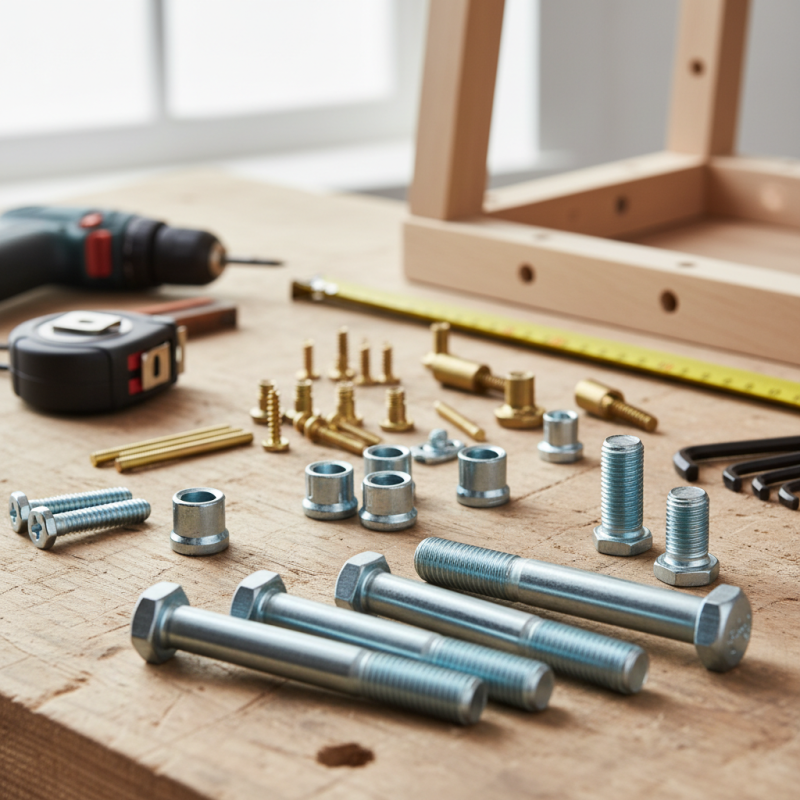
Choosing the right furniture bolt is crucial for any project. Understanding the types available can make this task easier. There are several main categories: carriage bolts, lag bolts, and machine bolts. Each type serves a different purpose and brings unique advantages. For instance, carriage bolts feature a rounded head for a clean finish, ideal for fastening wood.
In terms of material, options range from steel to stainless steel. According to a recent industry report, about 70% of consumers prefer stainless steel for outdoor furniture due to its corrosion resistance. Yet, steel remains a popular choice for indoor use because of its strength. Remember, selecting the right material impacts the longevity of your project.
Tips: Always check the load rating of bolts before making a purchase. Consider the wood density too. Bolts can benefit from pre-drilling holes, reducing the risk of splitting. Take your time to assess your needs; rushing may lead to poor choices.
How to Choose the Right Furniture Bolt for Your Project?
| Type of Furniture Bolt |
Description |
Use Cases |
Recommended Size |
| Lag Bolts |
Heavy-duty bolts with a large diameter and a pointed end for easy driving into wood. |
Used in furniture assembly and structural connections. |
3/8" to 1/2" |
| Carriage Bolts |
Bolts with a rounded head and a square neck to prevent spinning. |
Ideal for connecting metal to wood. |
1/4" to 1" |
| Machine Screws |
Uniform diameter screws designed for use with a nut or a tapped hole. |
Used in electronic equipment and furniture assembly. |
#4 to #10 |
| Toggle Bolts |
Anchors that have a spring-loaded toggle that opens inside a hollow wall. |
For hanging items on hollow walls. |
1/8" to 1/4" |
| Allen Bolts |
Bolts with a hexagonal socket for a hex key. |
Commonly used in furniture that requires disassembly. |
M5 to M10 |
Factors to Consider When Choosing Furniture Bolts for Your Project
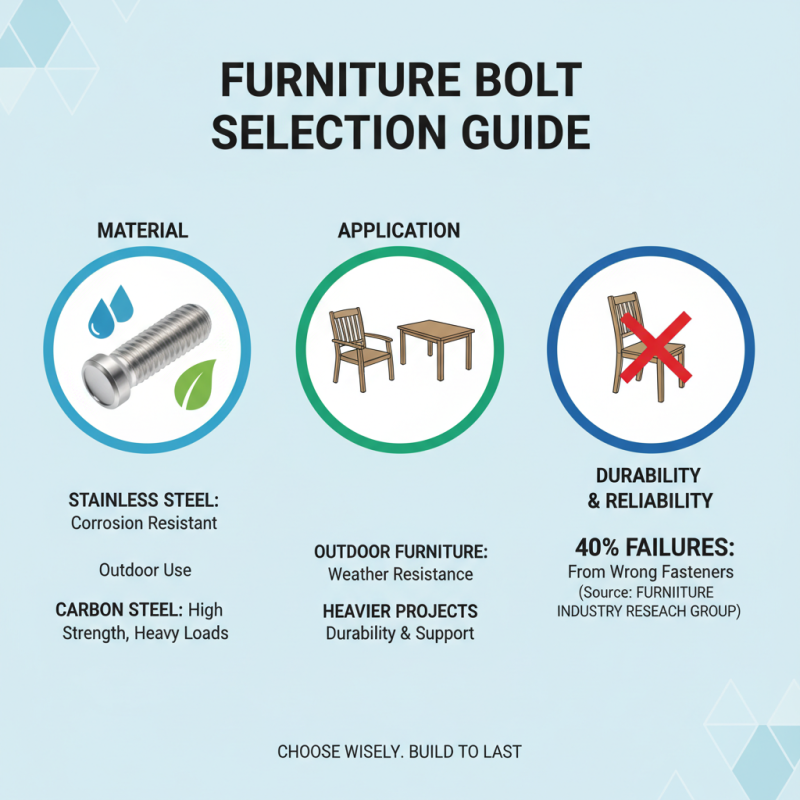
When selecting furniture bolts for your project, several factors demand careful consideration. Material is key. For instance, stainless steel has excellent corrosion resistance, making it ideal for outdoor furniture, while carbon steel offers strength for heavier applications. According to a report by the Furniture Industry Research Group, 40% of furniture failures relate to inadequate fastening choices.
Thread type is another critical element. Coarse threads grip better in softer materials, while fine threads allow for more precise adjustments. In a survey of furniture manufacturers, 65% reported that improper threading was a common mistake, leading to structural issues. Understanding load requirements is also essential. The same report indicated that nearly 30% of projects underestimated the stresses involved.
Dimension factors play a pivotal role as well. Bolt length and diameter must match your design needs to ensure optimal fit. Industry standards suggest that using bolts too short can compromise stability. Meanwhile, oversizing can lead to increased wear and tear on components. Reflecting on these dimensions is crucial. Only 50% of designers routinely measure correctly, resulting in costly revisions.
Matching Bolt Size and Length to Your Furniture Design
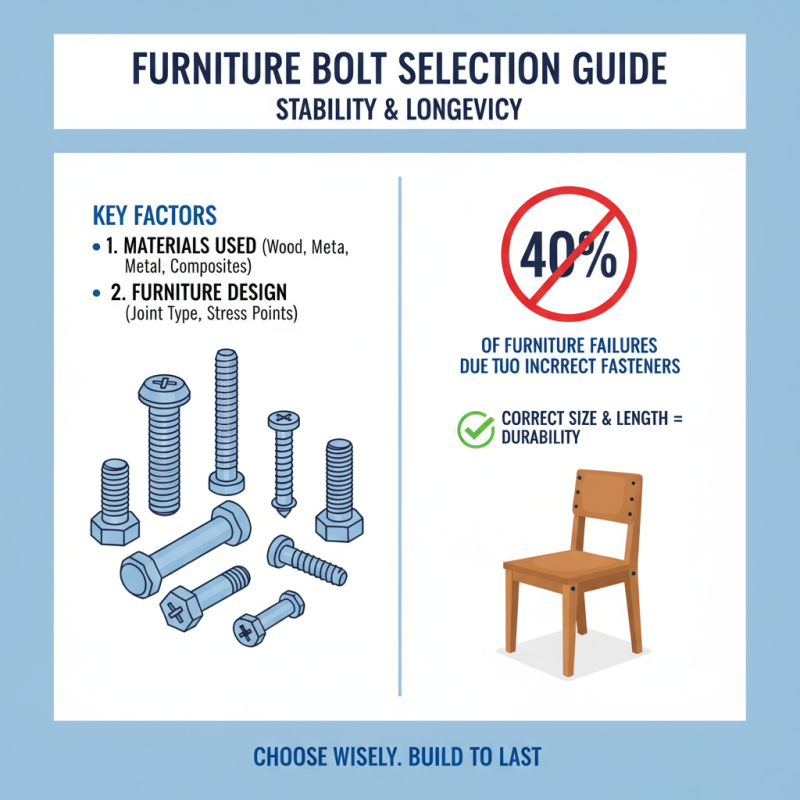
Choosing the right furniture bolt is critical for the stability and longevity of your project. The correct bolt size and length depend on the materials used and the design of your furniture. According to industry reports, around 40% of furniture failures arise from incorrect fasteners. This statistic highlights the need for careful consideration during the selection process.
When matching bolt sizes to your design, consider the thickness of the materials being joined. For instance, hardwood requires different bolt specifications compared to plywood. Most bolts are available in various diameters, ranging from 1/4 inch to 3/8 inch, which can significantly affect load-bearing capacity. A common mistake is using bolts that are either too short or too long. This oversight can weaken the assembly and lead to wobbly furniture.
Additionally, remember that the bolt head type can impact aesthetics and function. Flange bolts offer better weight distribution, while countersunk bolts provide a clean finish. Pay attention to the environment where the furniture will be used. For outdoor pieces, stainless steel bolts may be necessary to prevent rust. Many DIY enthusiasts overlook these details, leading to costly repairs down the line.
Material Selection: Which Bolt Materials Are Best for Durability?
When selecting furniture bolts, material matters immensely. The right material affects not only strength but also durability and appearance. Steel is a popular choice due to its high tensile strength. According to the American Institute of Steel Construction, steel can withstand high loads while maintaining structural integrity. However, it can rust if not properly treated.
Stainless steel is often recommended for its corrosion resistance. Its chromium content forms a protective layer preventing rust. Reports indicate that stainless steel bolts can last significantly longer in humid environments. On the other hand, brass bolts offer both aesthetics and moderate strength, but they may not perform well under heavy stress.
Tips: Consider the environment. If moisture is a concern, stainless steel is a better choice. Always check the specifications for weight loads before selection. Also, ensure bolts are compatible with the materials of your furniture. Don't hesitate to experiment. Trying different bolt types can lead to better results. Finally, remember that a mistake in bolt selection can lead to structural failure, so choose wisely!
Installation Tips for Securing Furniture Bolts Effectively
When securing furniture bolts, proper installation is crucial for stability.
Start by choosing the right size and type of bolt for your specific project. Using bolts that are too long or short can compromise safety.
It’s important to drill pilot holes to prevent splitting the wood.
A good fit minimizes movement and reduces wear over time.
Ensure you tighten bolts evenly. Avoid over-tightening, as it may weaken the connection. Use a torque wrench for precision.
This tool helps to achieve the right tension. Remember to check your work periodically. Loose bolts can lead to furniture instability.
Consider using thread-locking adhesives for extra security. This can help if you notice bolts loosening over time.
It might be useful to revise your technique if you encounter difficulties during installation.
Experiment with different methods. Learning through experience can lead to better results in future projects.