How to Choose the Right Stainless Bolt for Your Project?
Choosing the right stainless bolt for your project can be a challenging task. With various types of stainless bolts available, understanding their differences is crucial. Each project may demand specific characteristics from the fasteners. This decision impacts durability and performance.
Stainless bolts offer excellent resistance to corrosion. They are ideal for outdoor and marine applications. However, not all stainless steel grades are created equal. Each has unique properties, influencing strength, flexibility, and appearance. For instance, a304 stainless bolts resist rust well, while a316 provides even better protection in harsh environments.
Think about your project's requirements. Consider load-bearing capacity, environmental conditions, and aesthetic preferences. You might find yourself overwhelmed by options. It's essential to balance quality and cost. Remember, a poorly chosen stainless bolt can lead to project failure. This decision requires careful thought and reflection.
Understanding the Different Types of Stainless Steel Bolts
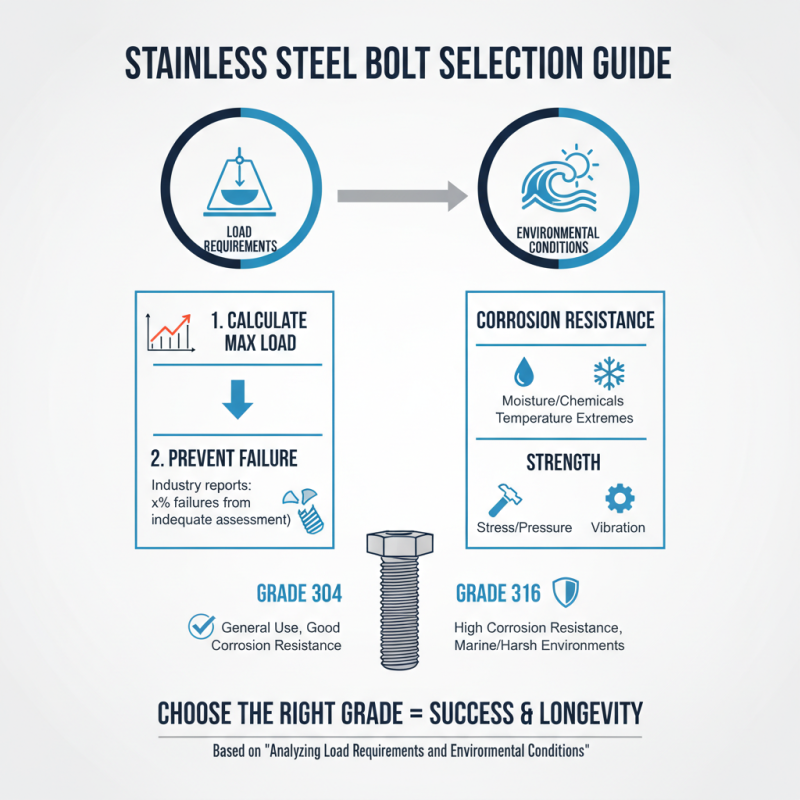
When selecting stainless steel bolts, understanding the types available is essential. There are several grades of stainless steel, each with unique properties. Common grades include 304 and 316. Grade 304 is known for its good corrosion resistance and versatility. In a corrosive environment, however, grade 316 performs better due to its higher nickel and molybdenum content.
Another important aspect is the bolt's finish. While some bolts are passivated to enhance corrosion resistance, others may have a bare or polished finish. According to a report by the International Stainless Steel Forum, about 70% of stainless fasteners used are made from these two grades. This data highlights their widespread adoption.
Additionally, the size and threading of bolts are crucial for successful application. Using an unsuitable thread could lead to weakened joints. It's vital to consider not only the material but also the load-bearing capacity. Keep in mind that not all stainless bolts are equal; while some perform admirably, others may falter under pressure. Reflecting on your project's needs can guide you to the appropriate choice.
Key Factors to Consider When Selecting Stainless Steel Bolts
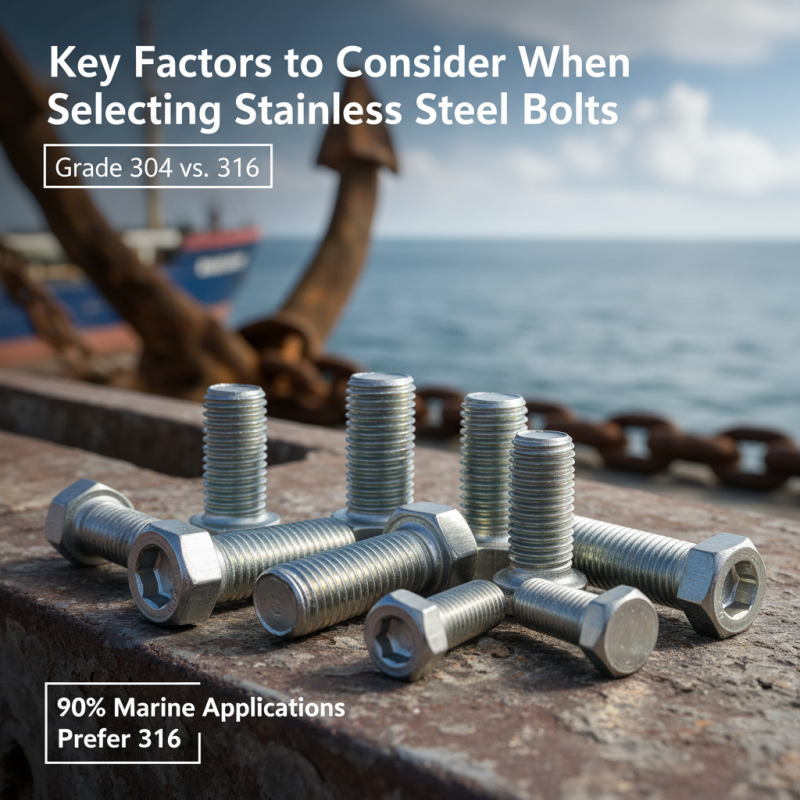
When selecting stainless steel bolts, several key factors are crucial. First, consider the grade of stainless steel. Common grades like 304 and 316 offer different levels of corrosion resistance. Grade 316 is often preferred in marine environments due to its higher molybdenum content. According to a recent industry report, around 90% of marine applications prefer 316 bolts for their durability.
The size and thread type of the bolt also matter. Ensure the bolt fits the application precisely. For example, UNC (coarse) threads are excellent for quick assembly, while UNF (fine) threads provide better tension in critical applications. Data suggests improper sizing can lead to failure rates of up to 30% in construction projects.
Tip: Always examine the environmental elements at play. If bolts are exposed to harsh chemicals or humidity, opting for higher-grade materials is wise.
Lastly, consider the finish and coating. A passivated finish helps resist rust, but not all coatings are equal. Some may wear off quickly under stress. Conduct a failure analysis to see if the chosen bolt meets project demands.
Tip: Test sample bolts during initial phases. This proactive approach helps ensure performance meets expectations.
Analyzing Load Requirements and Environmental Conditions
When selecting the right stainless bolt for your project, understanding the load requirements and environmental conditions is crucial. Stainless bolts come in various grades, such as 304 and 316, which offer different levels of corrosion resistance and strength. According to industry reports, a significant percentage of failures in fastening applications stem from inadequate load assessments. It’s essential to calculate the maximum load your bolts will bear. Using the right grade can mean the difference between success and failure.
Tips:
Always analyze the specific environment. Is it coastal, industrial, or chemical-heavy? Each has its implications. For example, bolts in seawater need higher corrosion resistance. Stress and fatigue factors are also vital. A miscalculation here can lead to catastrophic results.
Moreover, consider the installation method. Improper torque can compromise the bolt’s integrity. The American Society of Mechanical Engineers (ASME) emphasizes this in their guidelines. Even a slight overlook can lead to major headaches. Make sure to conduct failure mode analysis. This approach adds reassurance to your choice of fasteners.
Evaluating Bolt Size and Thread Specifications
Choosing the right bolt size and thread specifications is crucial for any project. Start with bolt diameter. A 1/4 inch bolt is much different from a 1 inch. The size affects load-bearing capacity. Understand the needs of your application. Consider the material's strength and the environment it will face. Corrosion-resistant options are often necessary in outdoor settings.
Thread specifications are equally important. Common types include coarse and fine threads. Coarse threads are easier to install but may not grip as well under tension. Fine threads, while harder to screw in, offer better strength and resistance to stripping. Evaluate which thread type aligns with your goals. Explore both Unc and UNF standards depending on your material compatibility.
Tips: Always check the bolt grade for strength requirements. Grade 5 bolts are common for medium-duty tasks. Consider using a combination of nuts and washers to enhance stability. Remember, not all bolts are universal. Choose wisely to avoid future issues. Review your selections often; it's easy to overlook details as you progress. Proper analysis upfront will save time and resources later.
Best Practices for Installation and Maintenance of Stainless Bolts
When installing stainless bolts, proper practices can significantly enhance durability. Maintenance starts with selection. Choose silicon-brass or austenitic stainless options for corrosion resistance. Studies show that over 25% of stainless steel failures stem from inappropriate grades for specific environments. Assess the project requirements carefully before making a decision.
Installation requires attention to detail. Torque settings are critical. Using the correct torque is necessary to prevent excessive stress. A report by the Fastener Quality Act indicates that improper torque could lead to bolt failure in 30% of mechanical applications. Ensuring cleanliness is vital. Contaminants can lead to galling, making bolts difficult to remove later.
Regular inspections help maintain integrity. Check for signs of wear, especially in high-stress areas. Inspect bolts annually, looking for rust or discoloration. Remember, maintenance is not just about replacement. Sometimes, tightening existing bolts can save time and resources. Allow time to reflect on your methods. Adjusting processes can improve project outcomes significantly.