What is a Countersunk Head Bolt and How is it Used?
The Countersunk Head Bolt is a vital component in many industrial applications. Its design allows for a flush surface when installed, making it ideal for sleek finishes. Engineers often prefer this type of fastener where aesthetics and functionality intersect. As per a recent report by the Fastener Quality Act, around 30% of professionals prioritize countersunk bolts for projects requiring minimal protrusion. This statistic highlights the importance of these bolts in modern engineering.
Moreover, the versatility of Countersunk Head Bolts cannot be overstated. They are prevalent in automotive, aerospace, and construction sectors. Their ability to distribute load evenly and prevent snagging enhances safety and durability. Yet, despite their benefits, improper installation can lead to critical failures. A study from the American Society of Mechanical Engineers notes that nearly 15% of failures in fastening systems stem from inadequate torque. This reflects a need for ongoing training and adherence to best practices in their usage.
Overall, Countersunk Head Bolts exemplify the balance between form and function. While they offer significant advantages, the potential pitfalls require careful consideration. Professionals in the field must stay informed and diligent about their application to maximize effectiveness.
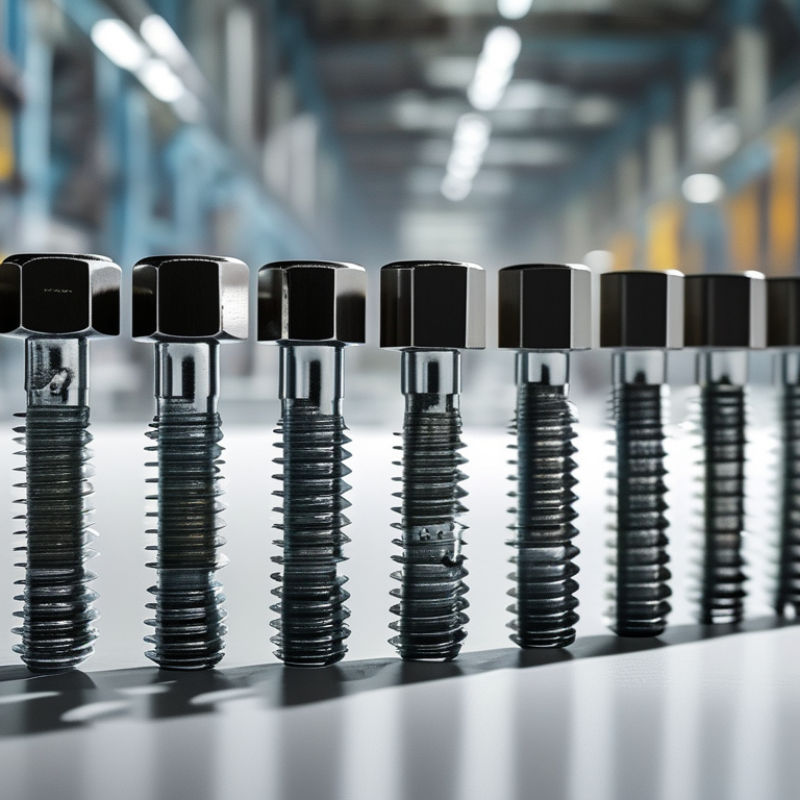
What is a Countersunk Head Bolt?
A countersunk head bolt features a head that tapers down
to a flush surface. This design allows the bolt to sit below the surface of the material it secures.
This characteristic makes it essential for applications where a smooth finish
is crucial, such as in woodworking and sheet metal projects. According to the
International Organization for Standardization, countersunk bolts ensure that no
projecting parts interfere with adjacent components.
Countersunk head bolts are made from various materials, including
stainless steel and carbon steel.
These bolts provide better holding power and resistance to shear forces.
The tightening torque is critical. Studies from the Machinery’s Handbook indicate
that proper torque settings can increase the joint's integrity significantly.
Inadequate torque can lead to joint failure, especially under vibration or load.
In practice, the use of countersunk head bolts can sometimes be
overlooked. Many users may choose standard bolts for simplicity. However, this choice can lead to issues
with aesthetics and functionality. For instance, a protruding bolt head on a machined surface can create
safety hazards or cause wear over time. Balancing practicality
with precision in choosing fasteners remains an ongoing challenge in engineering and craftsmanship.
Key Characteristics of Countersunk Head Bolts
Countersunk head bolts are a unique fastener type designed for specific applications. Their main feature is a conical shape on the head, allowing them to sit flush with the surface. This design is crucial in applications where a smooth surface is vital, such as in carpentry or automotive assembly. The flush design prevents snagging and provides a cleaner finish.
Key characteristics of countersunk head bolts include their varied sizes and material options. They often come in stainless steel, carbon steel, or other materials that resist corrosion. The angle of the countersink usually matches standard drill sizes, such as 82 or 90 degrees, making installation straightforward. The shape also allows the use of different types of screwdrivers and drivers, enhancing versatility.
While countersunk head bolts offer many benefits, challenges can arise. For instance, misalignment during installation can lead to improper seating. This improper fit can weaken the fastening. Users must ensure accurate drilling for the best results. Additionally, since they can be more challenging to access once installed, care must be taken when choosing their location. Proper planning is key to avoiding future complications.
Common Applications of Countersunk Head Bolts
Countersunk head bolts are specialized fasteners designed to create a flush surface in assembled materials. This unique design helps in applications where a smooth finish is crucial, allowing for both aesthetics and functionality. Commonly used in woodworking, they provide a clean finish that hides the bolt head beneath the surface. This prevents snagging and enhances the overall appearance of the finished product.
In the automotive and aerospace industries, countersunk head bolts are essential for securing components where airflow and drag are important. Their flush surface minimizes turbulence, leading to improved performance. In furniture, countersunk bolts are used for attaching legs or frames, maintaining design integrity. However, using the wrong size or type can lead to structural issues. A careful selection process is crucial. It’s easy to overlook the importance of bolt length or material, which can lead to unexpected weaknesses in a project.
Installation Procedures for Countersunk Head Bolts
Installation of countersunk head bolts requires precision and attention to detail. Begin by selecting the correct drill bit to create the countersink hole. The diameter must match the bolt’s head. It's essential to ensure the hole is deep enough to allow the bolt to sit flush with the surface. This step is crucial for aesthetic reasons and provides a smooth finish.
Next, align the countersunk bolt with the hole. Use a wrench to insert the bolt, ensuring it is tightened securely. Over-tightening can lead to material damage. It’s also important to check for any misalignment before securing the bolt completely. A misaligned bolt can compromise structural integrity.
Regularly inspect the installation for wear and tear. Rust or degradation can affect longevity. While countersunk head bolts offer great functionality, one must recognize the potential for issues, especially in high-stress applications. It’s vital to monitor the bolts frequently and replace them when needed. This proactive approach can prevent larger problems down the line.
Advantages of Using Countersunk Head Bolts in Construction
Countersunk head bolts offer distinct advantages in construction, making them a preferred choice for various applications. These bolts feature a conical-shaped head that allows them to sit flush with the surface of the material. This design minimizes protrusions, which enhances safety and aesthetics. A report from the Construction Industry Research and Information Association stated that utilizing countersunk bolts can reduce injuries related to sharp edges by up to 30%.
In addition to safety, countersunk bolts provide improved load distribution. The shape of the head allows a wider area for bearing loads, which prevents localized stress that can lead to structural failure. Research indicates that for heavy-loaded connections, countersunk bolts can enhance the overall integrity of a structure by up to 20% compared to traditional fasteners. However, installation can be tricky, requiring precise drilling and countersinking to ensure a perfect fit. Poorly executed installations may compromise the intended benefits.
Furthermore, the use of countersunk bolts promotes a streamlined construction process. By enabling smoother surfaces, they facilitate easier movement and transportation of materials on-site. Yet, it is essential to remember that these bolts may require specialized tooling, which could add costs to projects. Overall, while countersunk head bolts are advantageous in many aspects, careful consideration must be given to their installation and procurement.