Top Mushroom Head Carriage Bolt Manufacturers Worldwide
Choosing a reliable Mushroom Head Carriage Bolt manufacturer requires more than comparing catalog prices. Buyers must examine steel grades, dimensional consistency, thread accuracy, surface treatment, and production traceability. A polished head may look impressive, but performance begins beneath the surface. The square neck must engage correctly, especially in timber, sheet metal, and outdoor assemblies.
Dr. John H. Bickford, a respected authority on bolted-joint engineering, offers a practical principle: “A fastener is part of a joint, not an isolated component.” That idea guides this overview of the world’s leading Mushroom Head Carriage Bolt manufacturers. Strong suppliers usually provide material certificates, controlled heat treatment, corrosion testing, and clear inspection records. They also understand regional standards and application differences. A bolt used in furniture needs different priorities from one exposed to moisture, vibration, or repeated loading.
Manufacturing evidence matters.
This guide considers factory experience, certification practices, export capability, customization, and customer support. It also looks at less visible details, such as die maintenance, thread gauging, packaging protection, and batch identification. These factors can prevent loose fits, damaged threads, and installation delays.
No ranking is perfect. Supplier data can change, and public claims may not reveal every factory limitation. That weakness deserves attention. Readers should verify current certificates, samples, testing methods, and delivery records before making a final decision. With that cautious approach, the following sections identify manufacturers that demonstrate credible capability, consistent quality, and practical value across international markets.
Mushroom Head Carriage Bolts: Definition and Key Characteristics
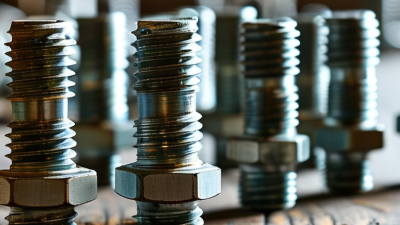
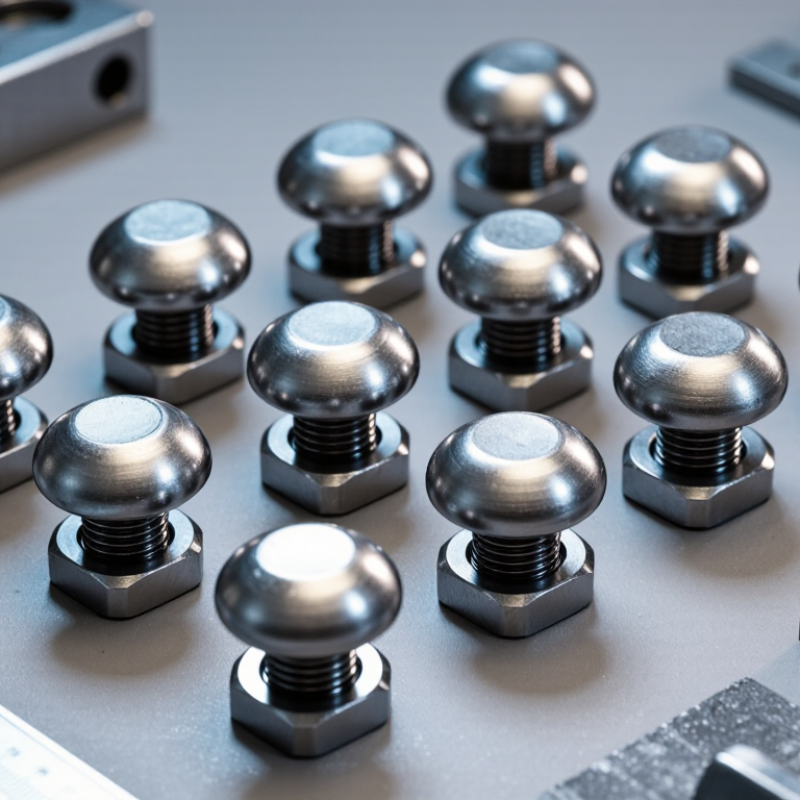
A mushroom head carriage bolt is a fastener with a broad, rounded head and a square neck directly beneath it. Its smooth top creates a finished appearance and reduces snagging on exposed surfaces. The neck is designed to seat in a matching square opening or bite into wood, helping keep the bolt from spinning as a nut is tightened. That detail matters. Without a secure seat, tightening can turn the bolt instead of drawing the joint together.
The threaded shank passes through the joined parts, and a compatible nut secures the assembly from the opposite side. Head diameter, neck dimensions, thread size, and bolt length affect fit and holding performance. Measure the material thickness and check that enough thread remains for the nut to engage fully. In timber, a pilot hole can help limit splitting, though the right size depends on the wood and bolt dimensions. Metal assemblies may need a square hole or another method to prevent rotation. Materials and finishes vary, so consider moisture, wear, and contact with dissimilar metals when choosing a fastener. A rounded head can look simple, but the hidden fit deserves careful attention.
Mushroom Head Carriage Bolts: Definition and Key Characteristics
Carriage bolts have a rounded, low-profile head and a square section beneath it that helps resist turning when the nut is tightened. This chart compares minimum tensile strength for two ISO 898-1 steel fastener property classes; it is a reference for strength classes, not a specification for every carriage bolt.
Minimum tensile strength (MPa), for nominal thread diameters up to 16 mm. Source: ISO 898-1 property-class requirements. Check the applicable product standard and manufacturer specifications for a specific bolt.
Materials, Coatings, and Manufacturing Standards
Top mushroom head carriage bolt manufacturers worldwide are judged by more than production volume. Materials, coatings, and standards reveal real manufacturing discipline. Carbon steel remains common because it balances strength, cost, and machinability. Stainless steel suits humid environments, food equipment, and outdoor assemblies. However, material selection should follow load, temperature, and corrosion exposure—not habit.
The World Steel Association reported approximately 1.89 billion tonnes of crude steel production in 2023. This scale supports broad material availability, but it does not guarantee bolt quality. Buyers should request heat numbers, mechanical test results, and dimensional inspection records. ISO 898-1 defines mechanical property requirements for carbon and alloy steel fasteners. For stainless grades, ISO 3506 provides relevant property classifications. Head diameter, square neck geometry, and thread accuracy still need practical checking. A bolt can meet a paper standard and fit poorly in a real panel.
Coating choice deserves equal attention. ISO 4042 covers electroplated coatings, while ISO 10683 addresses zinc flake systems. ASTM F2329 is commonly referenced for hot-dip zinc coatings on carbon steel fasteners. The USGS Mineral Commodity Summaries 2024 reported global zinc mine production near 12 million tonnes in 2023, supporting zinc’s continued industrial use. Still, coating thickness, hydrogen embrittlement control, and salt-spray results should be reviewed carefully. Salt spray is useful, but it is not a perfect field-life prediction.
Tips: Compare certificates with actual samples. Check thread fit by hand. Ask for coating thickness maps, not only averages. Reject vague claims. Manufacturing records sometimes look cleaner than production reality.
Leading Mushroom Head Carriage Bolt Manufacturers Worldwide
Leading mushroom head carriage bolt manufacturers worldwide are judged by repeatable geometry, verified strength, and dependable production—not polished catalogues alone. These bolts combine a broad, rounded head with a square neck that resists rotation as the nut tightens. Buyers should check head diameter, neck dimensions, thread fit, material grade, and coating thickness against the drawing. Ask for inspection records and lot traceability, too. Small dimensional drift can make installation awkward, especially in timber joints or outdoor assemblies.
Steel supply offers useful context, though it is not a measure of bolt output. World Steel Association’s World Steel in Figures 2024 reports 1,892.2 million tonnes of crude steel production worldwide in 2023. This large upstream base supports fastener production, but it does not prove any manufacturer’s quality or capacity. Strong suppliers document tensile or proof-load testing and assess coating performance under relevant conditions. Look for clear sampling methods and consistent reports. Even good paperwork can miss a rough thread. One caveat: buyers should verify samples independently when the application is critical. A clean, seated head matters. So does honest communication when specifications need clarification.
Quality Control, Certifications, and Product Customization
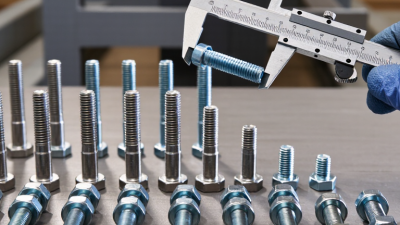
Top mushroom head carriage bolt manufacturers distinguish themselves through measurable quality control, not polished catalogs. Grand View Research estimated the global fasteners market at about USD 87.9 billion in 2023, with continued growth expected through 2030. That scale increases pressure on suppliers. Buyers should request material certificates, heat-lot traceability, dimensional inspection records, and coating test results. For mushroom head carriage bolts, inspectors should check head diameter, neck height, thread length, and square-neck fit. Small dimensional errors can cause spinning during installation.
Certification needs careful reading. The ISO Survey 2022 reported more than 1.2 million ISO 9001 certificates worldwide, showing broad adoption of quality systems. Yet certification alone proves process control, not perfect bolt performance. Suppliers should identify the exact standard, grade, scope, and production site. Mechanical requirements may reference ISO 898-1, ASTM A307, or another buyer-specified standard. Coatings also require evidence, such as thickness readings and salt-spray results. A certificate without batch details is weak evidence.
Customization is where technical competence becomes visible. Reliable manufacturers can adjust neck dimensions, head profiles, thread lengths, materials, finishes, and packaging. They should provide drawings before production and retain approval samples. I would also ask for torque testing under the actual assembly conditions. Laboratory results may not reflect field installation. That gap deserves attention. One practical improvement is a first-article inspection before full production. It costs time, but it can expose tooling wear, uneven plating, or incomplete threads early.
Industrial Applications and Global Supplier Selection Criteria
Top Mushroom Head Carriage Bolt Manufacturers Worldwide
Mushroom head carriage bolts support many industrial assemblies where a smooth outer surface matters. Their square neck helps prevent rotation during nut tightening. Common uses include timber frames, agricultural equipment, trailer floors, outdoor platforms, and conveyor guards. In humid factories, zinc-plated steel may suit indoor service, while stainless steel offers stronger corrosion resistance. Material choice still depends on load, temperature, and chemical exposure.
Supplier selection requires more than comparing unit prices. Check bolt diameter, length tolerance, thread accuracy, head dimensions, and neck fit. Ask for material certificates and batch traceability. Reliable manufacturers should provide inspection reports, coating thickness results, and samples before volume production. Their testing process should reflect recognized international standards and your equipment’s actual requirements. Production capacity also matters when a shutdown depends on one delivery.
A polished sample can mislead.
Review packaging, labeling, and moisture protection for long-distance shipping. Confirm minimum order quantities, tooling charges, lead times, and replacement procedures in writing. Factory audits or independent inspections can reveal inconsistent plating, mixed batches, or weak thread protection. Digital communication helps, but clear drawings remain essential. One overlooked detail is head clearance around welded frames. No checklist is perfect. Recheck the design after field installation, especially when vibration, rain, or repeated maintenance may affect joint performance.