Essential Tips for Using Countersunk Head Bolt Effectively?

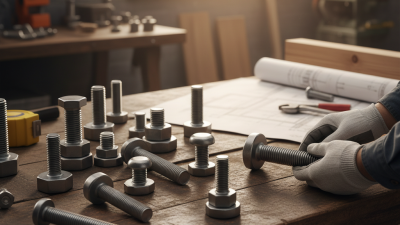
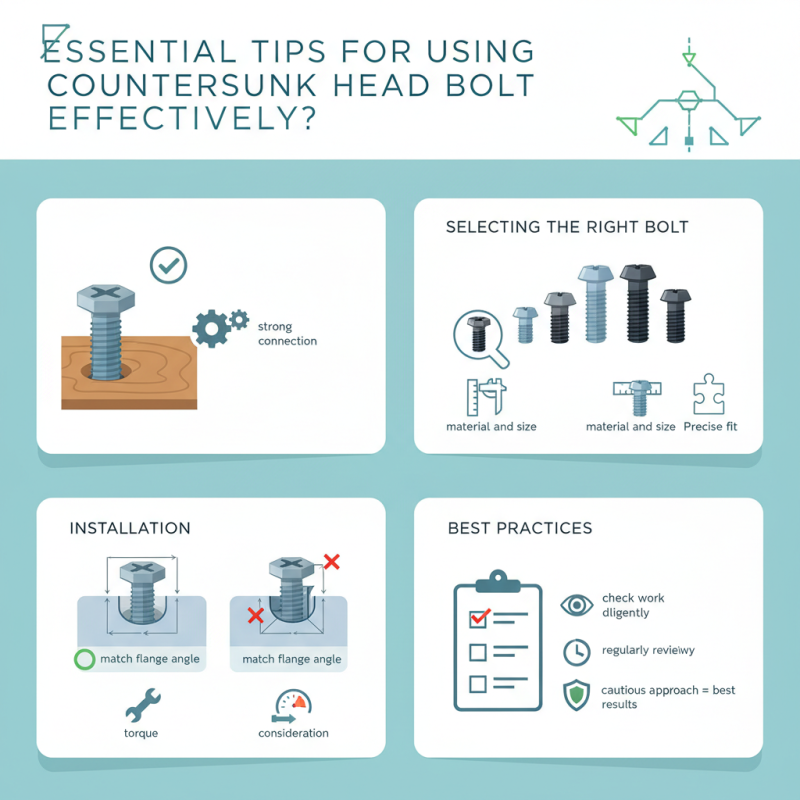
Using a countersunk head bolt can transform your project. These bolts provide a neat finish and strong connection. Selecting the right countersunk head bolt can significantly impact the success of your assembly.

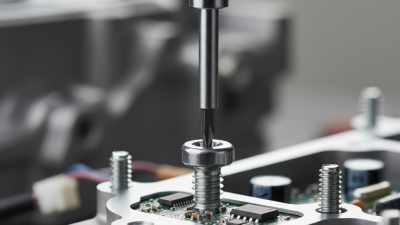
When using a countersunk head bolt, consider the material and size. A precise fit is crucial, as an ill-fitting bolt can lead to structural weaknesses. Additionally, ensure you match the flange angle to the countersink hole. Poor alignment can hinder performance and may compromise safety.

Every project faces unique challenges. Misjudgments in torque can lead to failure. Even experienced users must check their work diligently. Regularly reviewing the application process can enhance effectiveness and efficiency. A cautious approach to using countersunk head bolts will yield the best results.
Essential Tips for Using Countersunk Head Bolt Effectively?

Understanding the Structure and Function of Countersunk Head Bolts

Countersunk head bolts are essential in many engineering applications. They are designed with a flat underside that allows them to sit flush with the surface of the material being fastened. This unique structure minimizes disruption on the surface, making them ideal for aesthetic purposes and reducing the risk of snagging. Understanding how they function is crucial for effective use.

When using countersunk head bolts, ensure that the hole is properly drilled to match the bolt's diameter. A misaligned hole can lead to improper seating. Choose the right torque while tightening these bolts. Insufficient torque can cause loosening over time, while excessive force may damage the material. Consider using a thread-locking adhesive for added security.

It’s key to assess the load and stress factors on the bolt. Sometimes, using a single bolt may not provide adequate support. This could lead to potential structural failures. Always inspect the integrity of the bolt and the material it’s fastening. Small cracks or deformities can lead to bigger issues if not addressed promptly. Pay attention to these details for long-lasting and reliable performance.

Essential Tips for Using Countersunk Head Bolt Effectively

Dimension Material Application Load Capacity (lbs) Coating
M4 x 20mm Steel Wooden Structures 150 Zinc-Plated
M5 x 30mm Stainless Steel Metal Fabrication 200 None
M6 x 40mm Aluminum Automotive Assembly 250 Anodized
M8 x 50mm Carbon Steel Construction 350 Black Oxide
M10 x 60mm Titanium Aerospace 500 None

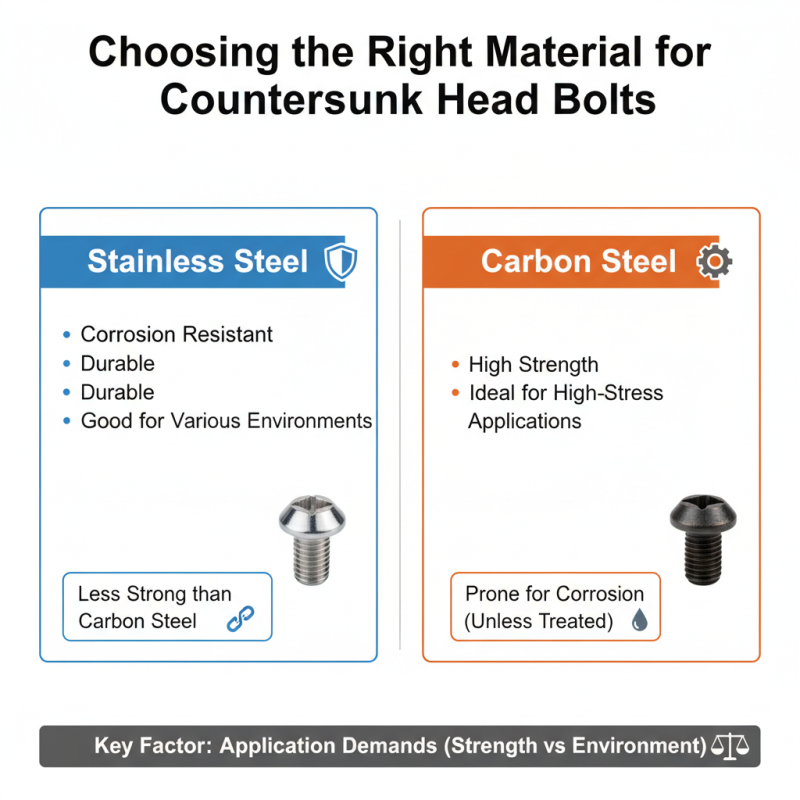
Choosing the Right Material for Countersunk Head Bolts

Essential Tips for Using Countersunk Head Bolt Effectively?

When choosing the right material for countersunk head bolts, several factors come into play. Stainless steel is a popular option due to its resistance to corrosion. It offers durability and can perform well in various environments. However, it’s worth noting that stainless steel bolts may not be as strong as their carbon steel counterparts. This can lead to issues in high-stress applications.

Carbon steel bolts are another viable material. They provide excellent strength and load-bearing capabilities. However, they are prone to rust if not coated or treated properly. This makes them unsuitable for outdoor or humid conditions without additional protection. It's essential to evaluate the environment where the bolts will be used to avoid potential failures.

Bronze or brass bolts can also be considered for specific applications. They offer good corrosion resistance but may not handle heavy loads as effectively. When selecting materials, think about both the mechanical properties and environmental factors. Always consult with a materials expert if the application is critical. Balancing these elements is essential for effective use of countersunk head bolts.

Proper Installation Techniques for Countersunk Head Bolts

Proper installation of countersunk head bolts is crucial for achieving a secure and stable assembly. Start by ensuring that the hole for the bolt is drilled precisely. If the hole is too large or misaligned, it may lead to a weak connection. Double-check measurements before starting. This step is essential for maintaining the integrity of your project.

When inserting the countersunk head bolt, make sure it's aligned with the surface. The head should sit flush to prevent protrusions that can cause issues later. Using a torque wrench can help apply the right pressure. Over-tightening can strip the threads, while under-tightening may lead to loosening over time. Listening to the feedback from the tools during installation is important.

For added security, consider using a washer. It helps distribute the load evenly and prevents damage to the surface material. However, be mindful that using a washer may alter the countersinking depth needed. Reflecting on these details ensures a more effective application of countersunk head bolts. Always take into account the specific needs of your project and make adjustments accordingly.

Common Applications for Countersunk Head Bolts

Countersunk head bolts are widely used across various industries due to their unique design. The countersunk feature allows the bolt head to sit flush with the surface, reducing protrusions. This design is particularly beneficial in applications where a smooth finish is critical. In the aerospace sector, for example, a flush surface can enhance aerodynamics. According to a report by the International Journal of Aerospace Engineering, proper fastening techniques can improve structural integrity by up to 35%.

In automotive manufacturing, countersunk bolts are commonly found in body panels and chassis components. They are preferred for their ability to distribute load evenly across a larger surface area. Data from the Automotive Industry Association suggests that using countersunk bolts can reduce vibration-related failures by 40%. However, improper installation may lead to stripped threads or insufficient torque, compromising safety. Awareness of torque specifications is critical in these applications.

The versatility of countersunk head bolts extends to furniture design. They are often used in flat-pack furniture to ensure a clean look and stability. However, the risk of user error during assembly is notable. A study from the Furniture Manufacturers Federation indicates that 30% of assembly errors result from misalignment of bolt heads. Ensuring accurate alignment is key to maintaining structural strength and aesthetic appeal in finished products.

Common Applications for Countersunk Head Bolts

Maintenance Tips for Longevity of Countersunk Head Bolts

To ensure the longevity of countersunk head bolts, proper maintenance is crucial. Regular inspections help identify issues before they become serious. Look for signs of corrosion or wear. When you notice discoloration or rust, it’s time to act. Clean the bolts with a suitable solvent to remove contaminants. This simple step can significantly extend the life of your bolts.

Lubrication is another important factor. Applying an appropriate lubricant helps reduce friction. It can also protect against rust. Choose a lubricant designed for metal surfaces. Apply it sparingly, as too much can attract dirt and grime. If the bolts are in a high-stress area, check them frequently. Loose bolts can lead to unexpected failures.

Environmental factors play a role in the lifespan of countersunk head bolts. Exposure to moisture or extreme temperatures can affect their performance. In humid conditions, consider using stainless steel bolts for better resistance. In colder climates, ensure they resist brittle fracture. Observing these aspects can seem tedious, but it's worth it. A little attention now can prevent bigger headaches later on.