What is a Torx Screw and How Does it Work?
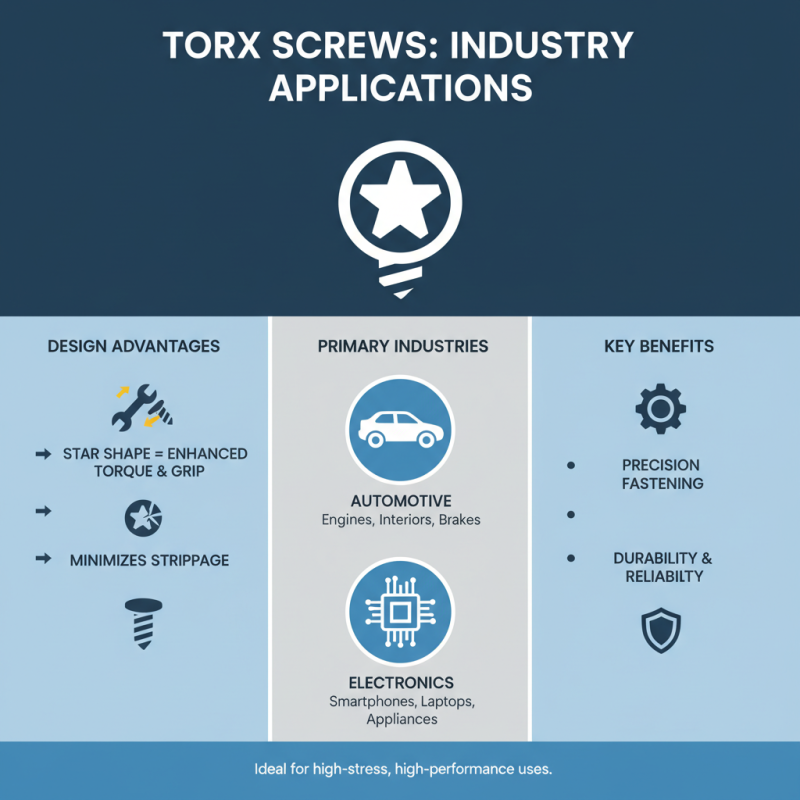
The Torx screw, characterized by its star-shaped pattern, has transformed fastening technologies in various industries. According to a report by Fastener Technology International, manufacturers have increasingly adopted Torx screws due to their enhanced torque capabilities and resistance to stripping. This innovative design allows for a more secure fit, making them ideal for automotive and electronics applications.
Expert John Trask, a leading figure in the fastener industry, emphasizes the significance of Torx screws, stating, "Their unique shape enhances user experience by minimizing slippage." However, despite their advantages, Torx screws can pose challenges. Many users find it difficult to locate the appropriate Torx driver, which leads to frustration and inefficiency.
The growing reliance on Torx screws highlights a shift in industry standards, yet there is still room for improvement. The development of universal tools could streamline their use. Furthermore, some manufacturers overlook providing clear specifications, adding to the confusion. While Torx screws offer numerous benefits, recognizing these potential shortcomings encourages better practices and innovations in fastening solutions.
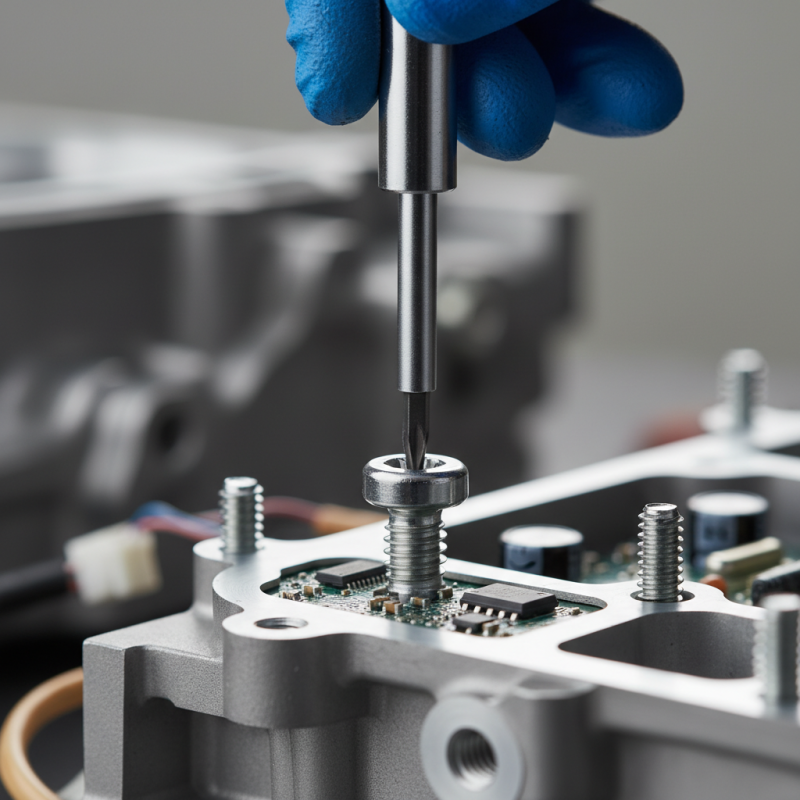
What is a Torx Screw?
Torx screws are a unique type of fastener that features a star-shaped head. This design allows for a better grip compared to traditional screws. The pattern helps to distribute pressure evenly, reducing the risk of stripping. Many people find them easier to use. However, they require specific tools, which can be a downside.
These screws are often used in electronics and automotive applications. Their popularity stems from their ability to handle higher torque. This makes them suitable for heavy-duty tasks. Yet, some users may struggle in finding the right Torx bit. It can be frustrating when the tools don’t match, leading to delays.
The size of the Torx screw also varies. Each size plays a crucial role in its function. This variety can confuse those who are unfamiliar. People may inadvertently choose the wrong size, resulting in poor performance. Ensuring a proper fit not only boosts effectiveness but also enhances safety in assembly. Understanding these aspects can make a significant difference in using Torx screws efficiently.
The History and Evolution of Torx Screws
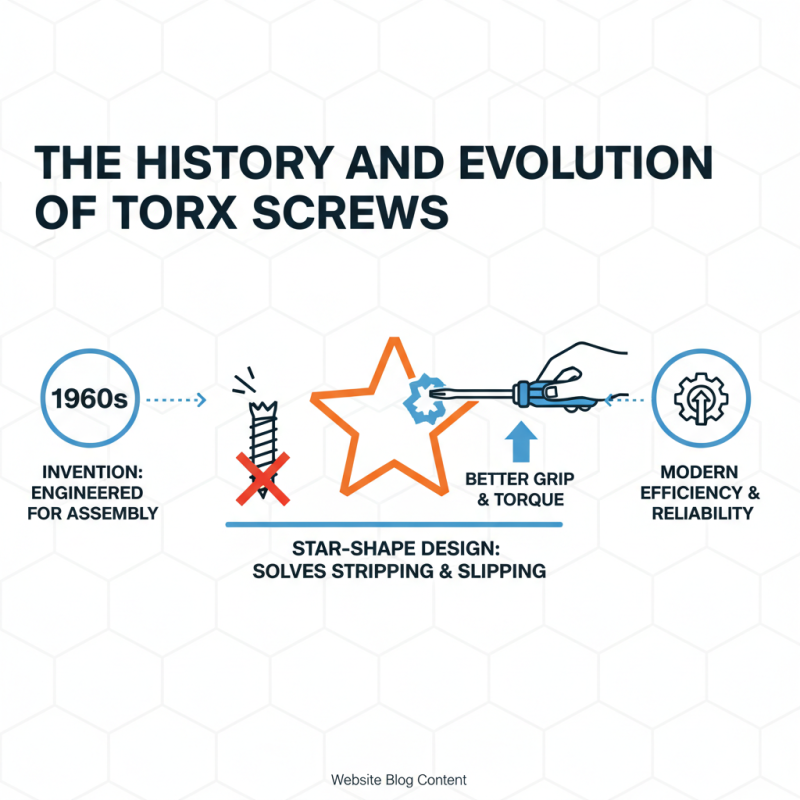
The evolution of Torx screws traces back to the 1960s, when they were engineered to improve assembly processes. Invented by a visionary engineer, these screws showcased a star-shaped design that offered better grip and torque. The unique shape addressed common issues with traditional screws, which often stripped or slipped.
A report from a leading fastening industry association notes that Torx screws reduce torque loss by 20%. This efficiency makes them particularly popular in automotive and electronic industries, where precision is critical. However, not all manufacturers adopted this design immediately. Some clung to old methods, causing friction in standardization.
Tips: When using Torx screws, ensure you have the correct driver. Using the wrong size can damage both the screw and the tool. Remember, a snug fit is essential, but don’t over-tighten. It can lead to twisting or breaking the screw. Keep your tools organized to avoid the frustration of searching for the right piece.
Design Features of Torx Screws
Torx screws feature a unique star-shaped pattern. This design allows for better torque transfer during installation. The six points of contact help distribute pressure evenly. As a result, they reduce the risk of stripping compared to traditional screws.
The driving tools for Torx screws are equally distinct. They require a specific Torx bit or key. This fits snugly into the screw head, minimizing slippage. However, not all toolkits come with these bits. Sometimes, you might need to search for the right tool.
While Torx screws excel in many applications, they aren’t without flaws. Some users find it challenging to identify the correct size. There are multiple sizes available, and this can lead to confusion. In certain situations, a stripped Torx screw can be difficult to remove. It’s crucial to have patience when working with them. Overall, Torx screws offer innovation, but understanding their features is essential for effective use.
What is a Torx Screw and How Does it Work? - Design Features of Torx Screws
| Feature |
Description |
Advantages |
| Drive Style |
Star-shaped recess for better grip |
Prevents slippage and cam-out |
| Material |
Variety of metals, including stainless steel |
Durable and resistant to corrosion |
| Sizes |
Available in various sizes (T1 to T100) |
Customizable for different applications |
| Applications |
Used in automotive, electronics, and appliances |
Improves manufacturing efficiency |
| Installation Tools |
Requires a Torx screwdriver or bit |
Reduces wear on the tool and screw |
How Torx Screws Function: A Mechanical Perspective
Torx screws have a unique six-pointed star shape. This design allows for better torque transfer. The internal profile grips the screwdriver securely, reducing slippage that is common with regular screws. This feature makes Torx screws ideal for high-tension applications, often used in automotive and electronic devices.
When it comes to how these screws function, the mechanics are intriguing. The design allows for even distribution of force. As you turn the screwdriver, the points engage deeply, minimizing wear on both the screw and the tool. However, finding the right Torx bit can be a hassle; many people are not aware of the varying sizes available and often confuse them. This confusion can lead to stripping of the screw heads, as using the wrong bit can result in damage.
In practice, tightening a Torx screw requires finesse. Too much pressure can lead to breakage. Many users overlook this detail. The precision of the fit is both a strength and a weakness; while it enhances grip, improper handling can lead to frustrating outcomes. Understanding these nuances is essential for effective use of Torx screws.