What Is a High Quality Carriage Bolt?
A High Quality Carriage Bolt is more than a smooth head and bright coating. It is a carefully engineered fastening component, designed to resist movement, corrosion, and repeated loading. John H. Bickford, a respected fastener engineering author, offers a practical warning: “A bolted joint is only as reliable as its design and installation.”
That principle shapes this guide. We will examine the bolt’s steel grade, heat treatment, thread accuracy, shank dimensions, square neck, and surface protection. The square neck should seat firmly inside the material, preventing the bolt from turning during nut tightening. Its rounded head should remain clean, even, and free from cracks. Small defects matter.
Looks can deceive.
A High Quality Carriage Bolt must also match its working environment. Outdoor timber structures may require zinc plating or stainless steel. Heavy machinery may demand higher strength, controlled tolerances, and verified mechanical properties. The correct bolt depends on load, vibration, moisture, temperature, and installation method.
Practical inspection is essential. Check the manufacturer’s markings, dimensional consistency, thread engagement, and certification records. A torque wrench helps, but torque alone cannot guarantee a reliable joint. Lubrication, surface friction, and material compression can change the final clamping force.
There is room for reflection. Even experienced buyers may focus on price and overlook traceability. A perfect-looking bolt can still be unsuitable for a demanding application. This article explains how to separate dependable quality from surface appearance, marketing language, and assumptions.
Definition and Core Features of a High-Quality Carriage Bolt
What Is a High Quality Carriage Bolt?
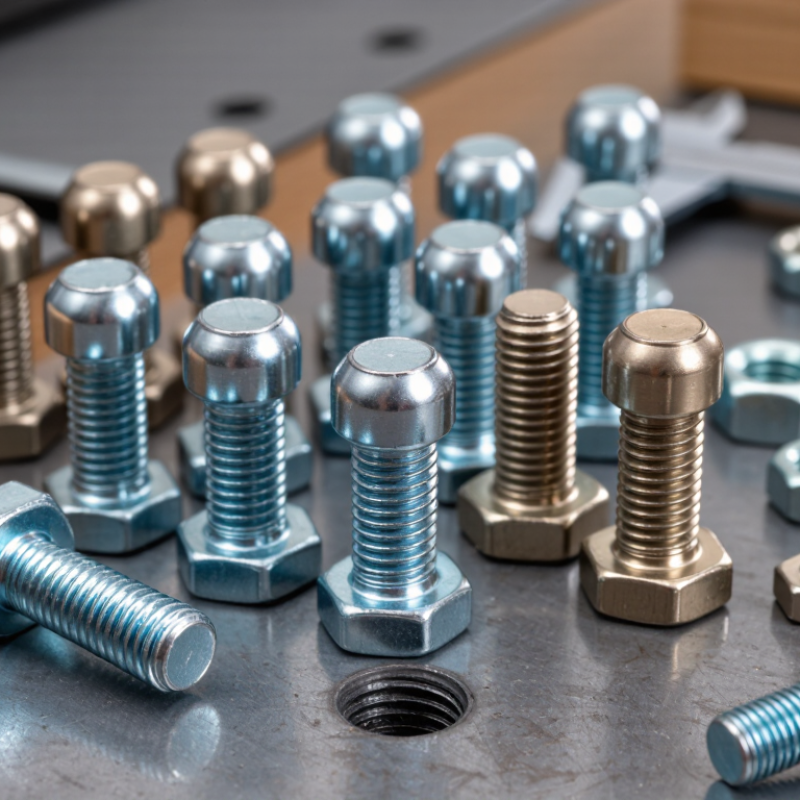
A high-quality carriage bolt combines accurate geometry, reliable steel, and consistent mechanical performance. Its rounded head should sit smoothly against the surface. The square neck must resist turning inside wood or a prepared metal hole. ISO 898-1 lists class 8.8 steel bolts with a nominal tensile strength of 800 MPa. That figure matters when joints face vibration, pulling force, or repeated loading.
Material traceability is equally important. World Steel Association’s World Steel in Figures 2024 recorded 1,888.2 million tonnes of crude steel production worldwide in 2023. Such scale makes uncontrolled material substitution possible. A dependable supplier should provide heat numbers, inspection records, and coating details. The bolt should also show consistent thread form, clean plating, and no cracks around the neck. A bright surface can mislead.
Dimensional accuracy deserves close attention. ASME B18.5 and ISO 8677 define key carriage-bolt dimensions, including head diameter, neck size, and thread length. Testing under ASTM F606/F606M can verify tension, proof load, and hardness. In practical inspection, a bolt should pass through its nut without binding. The head should remain flat under a washer. Small defects become expensive later. I would still question any bolt judged only by appearance; visual checks cannot reveal hidden hardness variation or poor heat treatment.
How to Evaluate Strength, Durability, and Corrosion Resistance
What Is a High Quality Carriage Bolt?
Strength starts with verified material, not a shiny finish.
ISO 898-1 lists 800 MPa minimum tensile strength for property class 8.8 bolts. Its specified yield strength is 640 MPa. However, carriage bolt performance also depends on thread accuracy, head seating, and the square neck. A strong bolt can still fail when the neck does not lock firmly into thin steel.
Inspect the bolt before installation. Look for clear markings, consistent threads, and a square neck without rounded corners. Torque testing should follow the applicable specification and use calibrated tools. Field experience shows that over-tightening can damage threads or crush softer materials. That mistake is easy to miss. Washer selection also matters.
Durability requires more than tensile data.
The NACE IMPACT study estimated global corrosion costs near 3.1% of worldwide gross domestic product. Zinc coatings, stainless steel, and suitable topcoats can reduce exposure, but none works everywhere. ASTM B117 salt-spray results help compare coatings under controlled conditions. ISO 9227 also warns that salt spray does not directly predict outdoor service life. I would treat any impressive test-hour claim cautiously. Humidity, trapped water, salt deposits, and contact with dissimilar metals can change the result. Check coating thickness, adhesion, and damaged areas after installation. The perfect carriage bolt does not exist. The right specification does.
Choosing the Correct Size, Thread Type, and Head Design
What Is a High Quality Carriage Bolt?
A high quality carriage bolt begins with the correct size, not a polished appearance. Measure the material thickness before choosing its length. The threaded section should pass through the joint and leave enough space for the nut. Avoid excessive thread extending beyond the nut. It can catch clothing or invite corrosion. A bolt that is too short may hold poorly. That mistake is easy to make.
Thread type also matters. Coarse threads work well in wood and softer materials. They start easily and tolerate minor dirt or damage. Fine threads provide more adjustment and stronger clamping in suitable metal applications. However, the nut and bolt must share the same diameter, pitch, and thread direction. Never force a mismatched nut. It may seem to fit at first.
Head design affects both appearance and performance. A rounded head offers a clean, snag-resistant surface, while the square neck below it resists turning during tightening. Check that the neck fits the hole without crushing the surrounding material. Stainless or coated finishes can help in damp locations, but coating quality still matters. I once selected a bolt by length alone and overlooked the shoulder shape. The joint held, but the head sat unevenly. That experience changed my inspection routine. Check the fit first.
What Is a High Quality Carriage Bolt? - Choosing the Correct Size, Thread Type, and Head Design
| Nominal Size |
Common UNC Thread |
Common UNF Thread |
Nominal Major Diameter |
Typical Head Diameter |
Typical Square-Neck Width |
Recommended Use |
Selection Notes |
| 1/4 in |
1/4-20 |
1/4-28 |
0.250 in |
0.625 in |
0.250 in |
Light-duty wood, sheet-metal, and small bracket assemblies |
Use a wide enough head to prevent pull-through in thin materials. |
| 5/16 in |
5/16-18 |
5/16-24 |
0.3125 in |
0.688 in |
0.3125 in |
General-purpose furniture, fencing, and equipment panels |
UNC is usually preferred for general assembly; UNF offers finer adjustment. |
| 3/8 in |
3/8-16 |
3/8-24 |
0.375 in |
0.875 in |
0.375 in |
Medium-duty frames, guards, trailers, and outdoor structures |
Check that the square neck fully engages the clearance hole or slot. |
| 1/2 in |
1/2-13 |
1/2-20 |
0.500 in |
1.125 in |
0.500 in |
Heavy-duty structural connections and machinery supports |
Confirm material strength, grip length, washer size, and tightening requirements. |
| 5/8 in |
5/8-11 |
5/8-18 |
0.625 in |
1.375 in |
0.625 in |
Large frames, heavy timber connections, and industrial assemblies |
Use when a larger clamping area and greater tensile capacity are required. |
| 3/4 in |
3/4-10 |
3/4-16 |
0.750 in |
1.625 in |
0.750 in |
Heavy structural, agricultural, and trailer applications |
Verify hole diameter and access for the nut and washer before installation. |
| 7/8 in |
7/8-9 |
7/8-14 |
0.875 in |
1.875 in |
0.875 in |
High-load structural and equipment connections |
Use only when the joint design and supporting material are suitable for the load. |
| 1 in |
1-8 |
1-12 |
1.000 in |
2.125 in |
1.000 in |
Very heavy-duty frames, foundations, and industrial equipment |
Check the applicable engineering standard for grade, preload, and installation torque. |
Dimensions shown are typical nominal values for inch-series carriage bolts with a round domed head and square neck. Exact head, neck, thread, and length dimensions can vary by applicable standard, bolt grade, and manufacturer. Select the bolt length so the threads extend through the nut without excessive protrusion.
Installation Standards and Performance Checks for Carriage Bolts
A high-quality carriage bolt starts with verified steel, accurate dimensions, and a dependable square neck. ASTM A307 Grade A specifies a minimum tensile strength of 60 ksi, or about 414 MPa, for common carbon-steel fasteners. The head should sit flat. The neck should enter the material without excessive force. I have seen bolts with attractive zinc finishes but poorly formed necks. Appearance alone proves little.
Installation standards matter more than packaging.
Clean the hole and remove burrs before assembly. The hole should match the specified clearance, not an improvised oversized opening. Seat the square neck fully before tightening the nut. Use a calibrated torque wrench when the project specification provides torque values.
Torque changes with thread condition, coating, lubrication, and washer use. Do not copy values from high-strength structural bolts. The RCSC Specification addresses structural bolting systems, and its snug-tight guidance should not be transferred blindly to ordinary carriage bolts.
Performance checks should include thread engagement, head seating, visible coating damage, and final movement. A practical field check is simple: mark the nut and bolt, apply the specified torque, then inspect after loading or vibration. ISO 898-1 lists 800 MPa minimum tensile strength for property class 8.8 bolts, but not every carriage bolt uses that class. Confirm the marking and certificate.
One weakness remains: installers often check torque but ignore hole fit. That habit deserves correction. A bolt can meet its strength rating and still fail because the joint slips, crushes wood, or loosens under repeated movement.